
Childhood diseases can have damaging effects on your baby. Proving essential for all parents to prioritise immunising their baby against serious childhood diseases.
When your baby is immunised against a disease, their body will produce antibodies to fight off that disease. The duration of protection varies amongst the immunisations, for some, one dose is enough to last a lifetime; others require additional booster doses according to the Childhood Vaccinations scheme (renamed from National Childhood Immunisation Schedule as of September 2025).
* Information extracted from Health Promotion Board
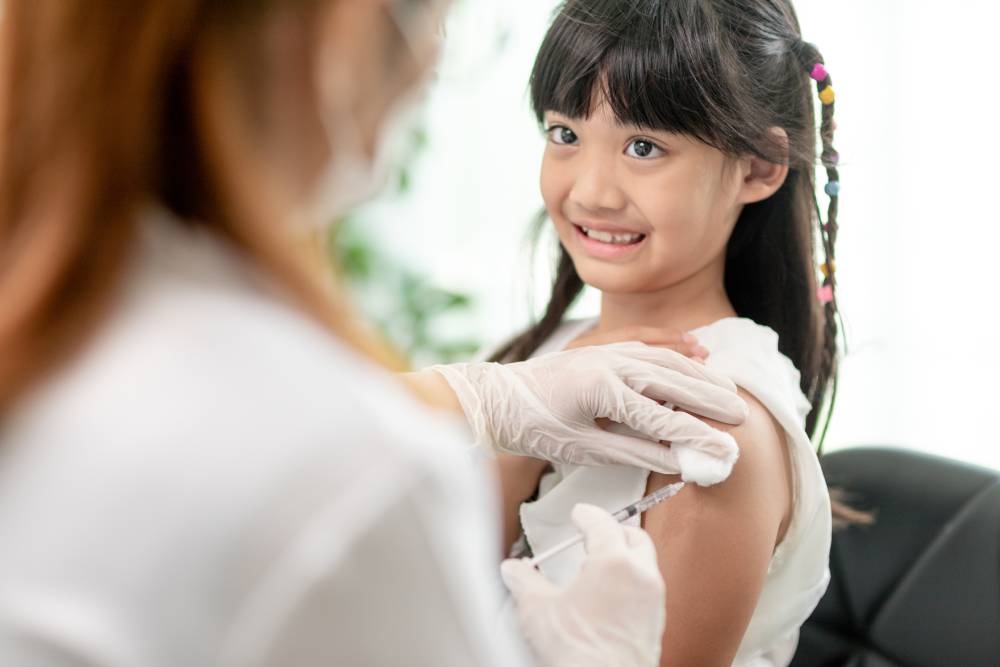
Full subsidies for vaccinations recommended under the Childhood Vaccinations are available at CHAS GP clinics and polyclinics for eligible Singaporean children who fulfil the age, gender and vaccination history requirements, and/or have the medical conditions/indications as recommended under the scheme.
Getting children vaccinated as recommended under the Childhood Vaccinations scheme can be done together with Childhood Developmental Screening at recommended age touchpoints, which are also fully subsidised for eligible Singaporean children at CHAS GP clinics and polyclinics. This scheme has been renamed as the Subsidies for Childhood Developmental Screening and Childhood Vaccinations since 2025.
*Information extracted from HealthHub
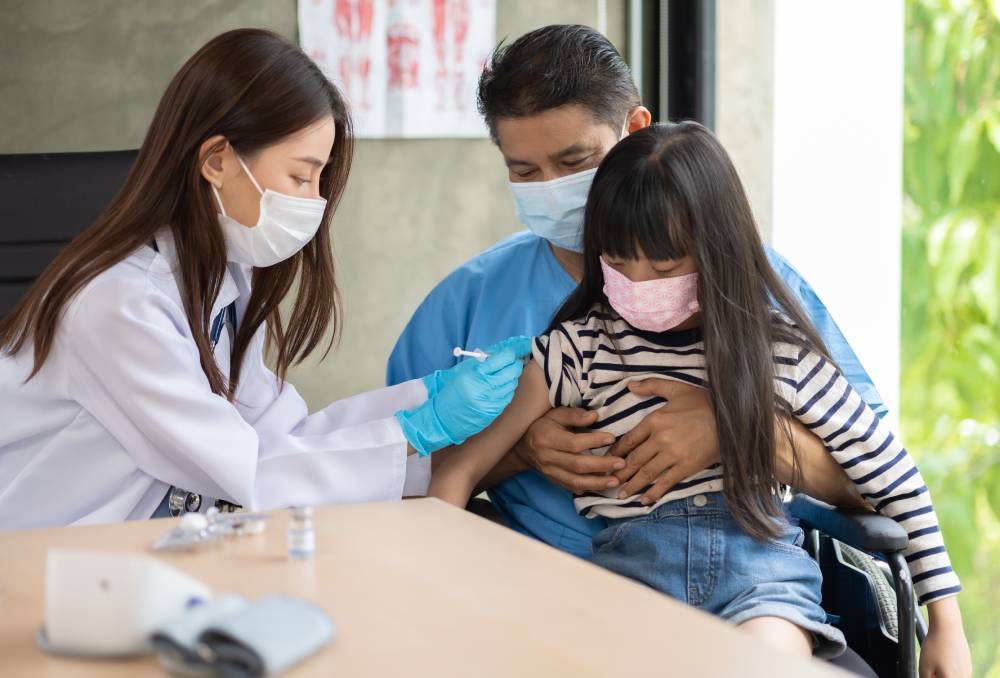
Fever in the young is the most common symptoms of many viral infections, and often the earliest symptoms. Fever is defined as having a body temperature of more than 38 degrees Celsius. When children are having fever, it is common for them to feel more tired, have decreased appetite and decreased activity levels. Regular tepid sponging as well as simple medications are usually effective in controlling fevers in our children.
There are certain features of the fever which can help our doctors with their diagnosis. It is important to note the maximum temperature of the fever, duration and onset of fever, as well as associated symptoms along with the fever.
If in doubt, it is always safer to visit a physician for a thorough physical assessment as children, especially the very young, can manifest illnesses through silent ways.
You can update the National Immunisation Registry when you are back in Singapore. Please submit your request via www.nir.hpb.gov.sg/nirp/eservices/login.
Yes. The Childhood Vaccinations scheme has been implemented based on recommendations of the Expert Committee on Immunisation, comprising of Ministry of Health senior officials, consultant paediatricians and experts in communicable disease.
This national committee regularly monitors and reviews the childhood immunisation programme in Singapore. The committee also closely follows recommendations from the World Health Organisation (WHO).
When your child is vaccinated, the details will be updated in your child’s Personal Health Booklet (provided at birth). It is important to remember to take this document along with you for all the vaccinations. This record may be requested by child care centres or pre-schools, many of whom require proof that your child is up to date with immunisations before enrolment.
Vaccination against Measles and Diphtheria is a requirement of the law.
Under the Infectious Diseases Act and the Infectious Diseases (Diphtheria and Measles Vaccination) Regulations, it is compulsory for parents and guardians to have their child vaccinated against measles and diphtheria.
* Information extracted from Health Promotion Board