
Key Takeaways
- Chickenpox and hand, foot and mouth disease (HFMD) are both common childhood viral illnesses, but they differ in the appearance and location of their rashes, as well as the symptoms they cause.
- HFMD typically causes painful sores in the mouth and a rash on the hands and feet, while chickenpox usually begins with an itchy, blister-like rash that spreads across the body.
- If your child develops a persistent fever, has difficulty drinking, appears unusually drowsy, or experiences worsening symptoms, prompt medical assessment is recommended.
- Good hygiene, keeping sick children at home, and staying up to date with recommended vaccinations where applicable can help reduce the spread of these infections.
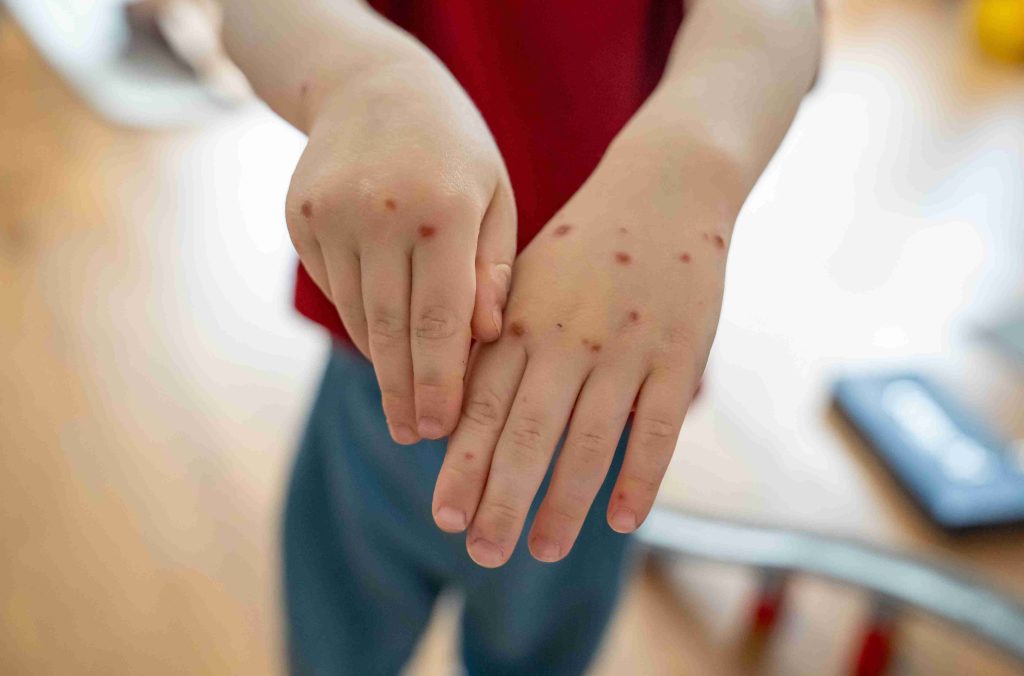
Seeing your child develop pediatric fever and rash can be worrying, especially when different childhood illnesses share similar symptoms. Two conditions that are commonly confused are chickenpox and hand, foot and mouth disease (HFMD).
The easiest way to distinguish between chickenpox and HFMD is by looking at where the rash appears and how it develops. Chickenpox usually causes an itchy rash that spreads across the body, while HFMD commonly causes painful mouth ulcers together with a rash on the hands, feet, and sometimes the buttocks.
Understanding these differences can help parents recognise the signs early and know when to seek medical attention.
What Is Chickenpox?
Chickenpox is a highly contagious viral infection caused by the varicella-zoster virus. It most commonly affects children, although adults who have never had the infection or vaccination can also become infected.
The illness often begins with mild, flu-like symptoms before the characteristic rash appears. Most children recover without complications, but some may require medical attention if symptoms become severe.
Children’s fever is often one of the earliest signs before the rash develops.
What Is HFMD?
HFMD is another common viral illness that primarily affects infants and young children. It is most frequently caused by coxsackievirus or enterovirus.
Despite its name, HFMD can sometimes cause rashes in areas beyond the hands and feet. However, painful sores inside the mouth remain one of its most distinctive features.
Like chickenpox, HFMD usually begins with a children’s fever, reduced appetite, and general tiredness before the rash appears.
Comparing Chickenpox and HFMD
Although both illnesses cause fever in children and skin rashes, they have several important differences.
| Feature | Chickenpox | HFMD |
| Cause | Varicella-zoster virus | Coxsackievirus or enterovirus |
| Fever | Usually appears before rash | Usually appears before rash |
| Rash | Itchy blisters across the body | Rash mainly on hands, feet, mouth, and sometimes buttocks |
| Mouth Sores | Less common | Very common and often painful |
| Itching | Usually significant | Usually mild |
| Duration | Around 5–10 days | Around 7–10 days |
Recognising these differences can help parents understand which illness may be affecting their child, although a healthcare professional should confirm the diagnosis when there is uncertainty.
How Does the Rash Differ?
One of the biggest clues is the appearance and location of the rash.
Chickenpox Rash
Chickenpox usually starts on the chest, back, or face before spreading to the rest of the body. The rash typically progresses through several stages:
- Small red spots
- Fluid-filled blisters
- Blisters that burst
- Crusts or scabs
It is common for different stages of the rash to be present at the same time. The rash is often intensely itchy, which may make children uncomfortable.
HFMD Rash
HFMD usually produces much smaller spots or blisters. These commonly appear on:
- Palms of the hands
- Soles of the feet
- Inside the mouth
- Around the lips
- Buttocks
- Occasionally the legs
Unlike chickenpox, HFMD sores inside the mouth can be painful enough to make eating or drinking difficult. Because swallowing may become uncomfortable, some children may drink less than usual, increasing the risk of dehydration.
Does the Fever Feel Different?
Both illnesses commonly begin with fever, making it difficult to tell them apart during the first day or two.
Children fever associated with chickenpox is often followed fairly quickly by the itchy rash.
With HFMD, the child’s fever may be accompanied by sore throat, reduced appetite, and painful mouth ulcers before the hand and foot rash becomes obvious.
For this reason, parents should not rely on a kid’s fever alone to distinguish the two illnesses.
Other Symptoms to Watch For
Chickenpox may also cause:
- Fatigue
- Loss of appetite
- Headache
- General body aches
- Irritability
HFMD may cause:
- Painful mouth ulcers
- Drooling in younger children
- Refusal to eat or drink
- Mild sore throat
- General fussiness
These accompanying symptoms often provide additional clues alongside the rash.
When Should You See a Doctor?
Although both chickenpox and HFMD are often mild and resolve on their own, some children may require medical assessment. You should seek medical attention if your child:
- Has a persistent or high children fever
- Becomes unusually sleepy or difficult to wake
- Has trouble breathing
- Refuses fluids or shows signs of dehydration
- Experiences repeated vomiting
- Develops severe pain or worsening rash
- Has a weakened immune system or another significant medical condition
Infants, very young children, and children with underlying health conditions may require closer monitoring.
How Are These Conditions Diagnosed?
In most cases, a healthcare provider can diagnose chickenpox or HFMD based on your child’s symptoms and a physical examination.
The pattern of the rash, the presence of mouth ulcers, and the child’s recent exposure to others with similar illnesses often provide enough information to make a diagnosis.
Laboratory testing is not usually necessary for uncomplicated cases but may occasionally be recommended if the diagnosis is uncertain or if complications are suspected.
How Are Chickenpox and HFMD Treated?
Both illnesses are caused by viruses, so treatment mainly focuses on relieving symptoms while the body recovers. Supportive care may include:
- Encouraging adequate fluid intake
- Ensuring plenty of rest
- Providing age-appropriate medication to reduce fever or discomfort, as advised by a healthcare professional
- Offering soft, cool foods if mouth ulcers make eating uncomfortable
- Keeping fingernails short to reduce skin damage from scratching
Parents should avoid giving medications unless they are appropriate for the child’s age and have been recommended by a healthcare professional.
When a child’s fever is accompanied by poor fluid intake or increasing lethargy, medical review is advisable rather than continuing home care alone.
Preventing the Spread
Both chickenpox and HFMD spread easily, especially in childcare centres and schools. Simple preventive measures include:
- Washing hands thoroughly and frequently
- Covering coughs and sneezes
- Cleaning frequently touched surfaces
- Avoiding the sharing of utensils, towels, and drinking bottles
- Keeping sick children at home until they are no longer considered contagious or are well enough to return, according to local public health guidance
Vaccination is available for chickenpox in many countries and may help reduce the risk of infection or severe illness. Currently, routine vaccination against HFMD is not widely available in many regions, making good hygiene especially important.
Can Adults Get Chickenpox or HFMD?
Although these illnesses are more common in children, adults can also become infected.
Adults who have never had chickenpox or have not been vaccinated may develop the illness, and symptoms can sometimes be more severe than in children.
HFMD can also affect adults, although infections are generally less common and may cause milder symptoms. However, infected adults can still spread the virus to others.
If an adult develops a rash together with a child’s fever in a household where a child is unwell, medical evaluation may help determine the cause.
Can a Child Catch Them More Than Once?
Chickenpox usually provides long-lasting immunity after infection, so most people only develop it once.
HFMD is different. Because several viruses can cause the illness, a child may develop HFMD more than once after being infected by different viral strains.
This is one reason why ongoing hygiene measures remain important, even if your child has previously had HFMD.
Helping Your Child Recover Comfortably
Recovery is often smoother when parents focus on keeping their child comfortable. Some helpful measures include:
- Encouraging regular sips of water to prevent dehydration
- Dressing your child in lightweight clothing if they have a children fever
- Allowing adequate rest at home
- Monitoring symptoms daily
- Following your healthcare provider’s advice regarding symptom relief
Most children gradually improve within one to two weeks without long-term problems.
Conclusion
Chickenpox and HFMD may both begin with fever and a rash, but they have several important differences. Chickenpox typically causes an itchy, blister-like rash that spreads across the body, whereas HFMD is more likely to cause painful mouth ulcers together with a rash on the hands and feet.
Paying attention to where the rash appears, how it develops, and whether mouth sores are present can help parents distinguish between the two conditions. While many children recover with supportive care at home, persistent children fever, dehydration, unusual drowsiness, breathing difficulties, or worsening symptoms should prompt medical assessment.
If you are unsure whether your child has chickenpox, HFMD, or another illness, consult a healthcare professional for an accurate diagnosis and personalised advice. Early evaluation can provide reassurance, guide appropriate care, and help reduce the risk of complications.
References
Pmc.ncbi.nlm.nih.gov. Clinical Features of Poorly Distinguishable HFMD and Chickenpox in Children: A Retrospective Analysis. https://pmc.ncbi.nlm.nih.gov/articles/PMC12728019/
Emedicinehealth.com. Chickenpox vs Hand, Foot, and Mouth Disease. https://www.emedicinehealth.com/chickenpox_vs_hand_foot_and_mouth_disease/article_em.htm
Goodrx.com. Chickenpox vs. Hand, Foot, and Mouth Disease: How to Tell the Difference (With Pictures). www.goodrx.com/health-topic/infections/chickenpox-vs-hand-foot-mouth-disease-pictures