
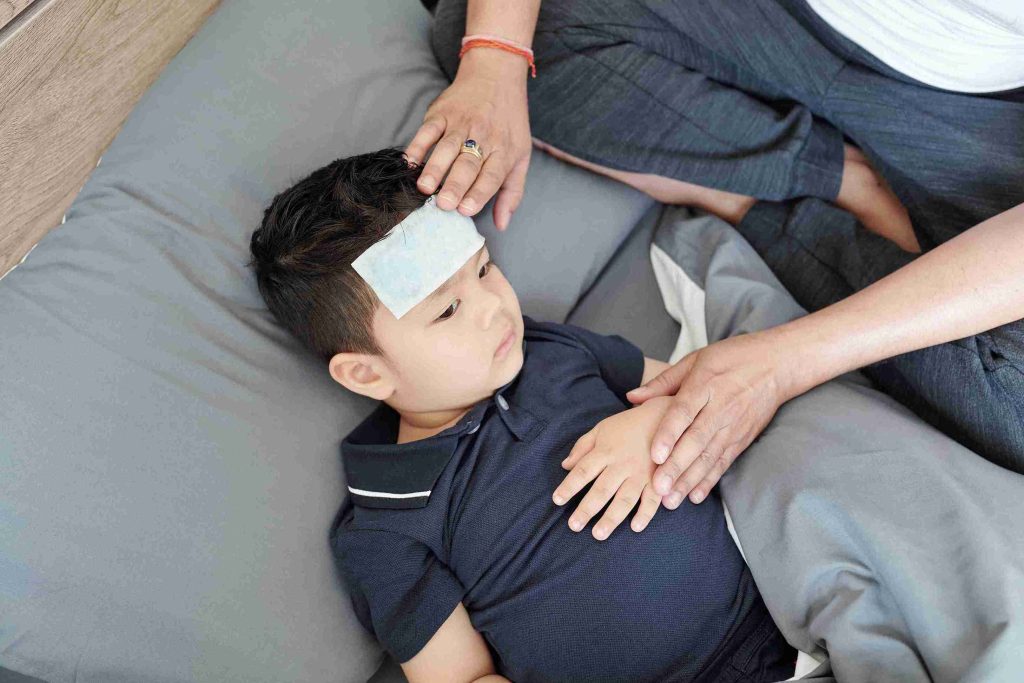
Key Takeaways
- Fever cooling patches may provide a temporary cooling sensation and help some children feel more comfortable, but they do not treat the underlying cause of a fever.
- For children fever, hydration, rest, comfortable clothing, monitoring, and appropriate medical advice are generally more important than simply lowering the temperature.
- Cooling patches should not replace appropriate fever medicine or medical assessment when a child has concerning symptoms.
- Parents should focus on the child’s overall condition, including alertness, breathing, hydration, and behaviour, rather than relying only on the temperature reading.
A child’s fever can be worrying, especially when a child feels hot, tired, or uncomfortable. Parents often look for simple ways to provide relief, including cooling patches placed on the forehead.
Cooling patches are designed to create a cool sensation on the skin. However, they are different from medicines that reduce fever. They may make a child with fever feel more comfortable temporarily, but they do not treat the infection or medical condition responsible for the fever.
Are fever cooling patches good? They can be used as a temporary comfort measure, but they should not be considered a treatment for children’s fever or a replacement for appropriate medical care. For children with fever, the focus should be on keeping the child comfortable, maintaining hydration, monitoring their condition, and seeking medical advice when necessary.
What Is a Fever?
Fever in children is usually the body’s natural response to an infection or another medical condition. It does not necessarily mean that the illness is serious. Many children recover from common infections with supportive care and monitoring.
When managing children’s fever, parents should consider more than the number shown on a thermometer. A child who has a fever but remains alert, drinks normally, and responds appropriately may require less intervention than a child who appears unusually sleepy, distressed, dehydrated, or difficult to wake.
The child’s behaviour and general condition can therefore provide important information about how unwell they may be.
How Do Fever Cooling Patches Work?
Fever cooling patches usually contain a cooling gel or similar material that feels cool when applied to the skin. They are commonly placed on the forehead and may provide a soothing sensation while the patch remains cool.
However, the cooling effect is mainly local. A patch does not necessarily lower a child’s internal temperature significantly or for a sustained period. It also does not address the infection or condition causing the fever.
For kids with fever, cooling patches are therefore best viewed as a comfort product rather than a fever treatment. If your child enjoys the cooling sensation and the product is suitable for their age, it can be used according to the manufacturer’s instructions.
Cooling Patches Compared With Other Fever Care
| Approach | Main purpose | Important consideration |
| Cooling patch | Provides a cooling sensation | Does not treat the cause of fever |
| Fluids | Helps maintain hydration | Offer regular drinks suitable for the child’s age |
| Comfortable clothing | Helps prevent overheating or shivering | Avoid excessive wrapping or undressing |
| Paracetamol or ibuprofen | Helps relieve discomfort and reduce temperature | Use only when appropriate and follow dosing instructions |
| Medical assessment | Identifies possible causes and complications | Important when warning signs are present |
The goal of pediatric fever care is not necessarily to make the thermometer reading completely normal. Instead, treatment should focus on helping the child feel comfortable and identifying signs that medical attention may be required.
Focus on Your Child’s Comfort
If your child has a fever but remains alert and comfortable, there may be no need to aggressively lower their temperature. Encourage regular fluids and allow them to rest.
Dress your child comfortably according to the surrounding temperature. Avoid wrapping them in heavy blankets because this may contribute to overheating. At the same time, avoid deliberately underdressing a child who is shivering, as this can make them uncomfortable.
For children with fever, comfort is often a more useful guide to supportive care than the temperature reading alone.
When Is Fever Medicine Appropriate?
Paracetamol or ibuprofen may be considered when a child with a fever appears distressed or uncomfortable. These medicines can reduce temperature and improve comfort, but they do not treat the underlying infection.
Parents should follow the dosing instructions for the specific product and the child’s age or weight. Some children may not be suitable for certain medicines because of their age, dehydration, medical conditions, or other circumstances.
Do not give aspirin to children unless specifically instructed by a healthcare professional. If you are uncertain about which medicine to use or how much to give, speak with a doctor or pharmacist.
Should You Use a Cooling Patch Instead of Medicine?
A cooling patch should not be considered a replacement for medically appropriate fever management. If your child is uncomfortable, the priority is to determine the safest way to relieve their symptoms.
A patch may be used as an additional comfort measure if the child tolerates it, but parents should not delay appropriate treatment simply because a cooling patch is being used.
It is also important to avoid combining multiple fever-management methods without understanding their purpose. Excessive cooling can cause shivering, while incorrect medicine use can lead to dosing errors.
What About Cold Baths or Sponging?
Parents may assume that making the skin colder will bring down a fever faster. However, cold baths, ice packs, and aggressive cooling can cause shivering and distress and are generally not recommended for routine fever management.
Tepid sponging is also not routinely necessary. Instead, parents should focus on keeping the child comfortable, preventing dehydration, and monitoring their condition.
Cooling patches are different from cold baths or ice treatments because they generally provide a mild, local cooling sensation. Nevertheless, they should still be considered a comfort measure rather than a treatment.
Signs Your Child May Need Medical Attention
Most childhood fevers are associated with common infections, but certain symptoms require prompt medical assessment. Seek medical advice if your child:
- Is unusually sleepy, difficult to wake, or not responding normally
- Has difficulty breathing
- Is unable to drink or shows signs of dehydration
- Has a seizure
- Develops a rash that does not fade when pressed
- Is becoming progressively more unwell
- Has persistent vomiting or other concerning symptoms
- Is very young and has a fever
Age is particularly important. Infants younger than three months with a temperature of 38°C or higher require prompt medical assessment.
When managing children fever at home, monitor changes in behaviour, breathing, fluid intake, and alertness rather than relying only on the thermometer.
How to Care for a Child With Fever at Home
Supportive care can make a feverish child more comfortable while the underlying illness runs its course.
Offer frequent fluids and continue breastfeeding for infants who are breastfed. Allow your child to rest and dress them comfortably. Monitor urine output and watch for signs of dehydration, such as a dry mouth, fewer wet nappies, or reduced urination.
Use a reliable thermometer when checking temperature is necessary. It can also help to keep a record of medicines given, including the time and dose, to reduce the risk of accidentally giving an extra dose.
For children fever that persists, worsens, or occurs alongside concerning symptoms, contact a healthcare professional for advice.
Frequently Asked Questions
Do fever cooling patches lower fever?
They may feel cool on the skin, but they should not be relied upon to significantly or consistently lower a child’s internal temperature.
Can my child use a cooling patch while taking fever medicine?
A cooling patch may be used for comfort if your child tolerates it, but it should not replace appropriate medication or medical advice. Follow the instructions for all products used.
How long can a cooling patch be used?
Follow the manufacturer’s instructions for application time and replacement. Remove the patch if your child develops skin irritation, discomfort, or an allergic reaction.
When should I worry about a child’s fever?
Seek medical attention if your child is difficult to wake, has breathing problems, a seizure, significant dehydration, a non-fading rash, or other signs of serious illness. Very young infants with fever also require prompt assessment.
Do cooling patches prevent febrile seizures?
No. Cooling patches should not be used specifically to prevent febrile seizures. Their primary purpose is to provide a cooling sensation and temporary comfort.
Conclusion
Fever cooling patches can provide a temporary cooling sensation and may help some children feel more comfortable, but they should not be viewed as a treatment for the underlying cause of fever. For most children, appropriate supportive care includes fluids, comfortable clothing, rest, careful monitoring, and fever medicine when appropriate.
When managing children’s fever, focus on the child’s overall condition rather than trying to make the thermometer reading completely normal. Pay attention to alertness, breathing, hydration, behaviour, and other symptoms.
If you are concerned about your child’s fever, especially if they are very young or have warning signs, contact a qualified healthcare professional. Prompt assessment can help determine whether the fever can be safely managed at home or whether further medical care is needed.
References
Vinmec.com. Understanding Fever-Reducing Patches Correctly. https://www.vinmec.com/eng/blog/correct-understanding-of-antipyretic-patches-en
Intcohealthcare.com. Why Parents Choose Cooling Get Patches for Baby Fever Relief. https://www.intcohealthcare.com/news/why-parents-choose-cooling-gel-patches-for-baby-fever-relief
News.immigration.gov.tw. Does a Fever Patch Work for Children with Fever?. https://news.immigration.gov.tw/NewsSection/Detail/